






Latest Articles
-
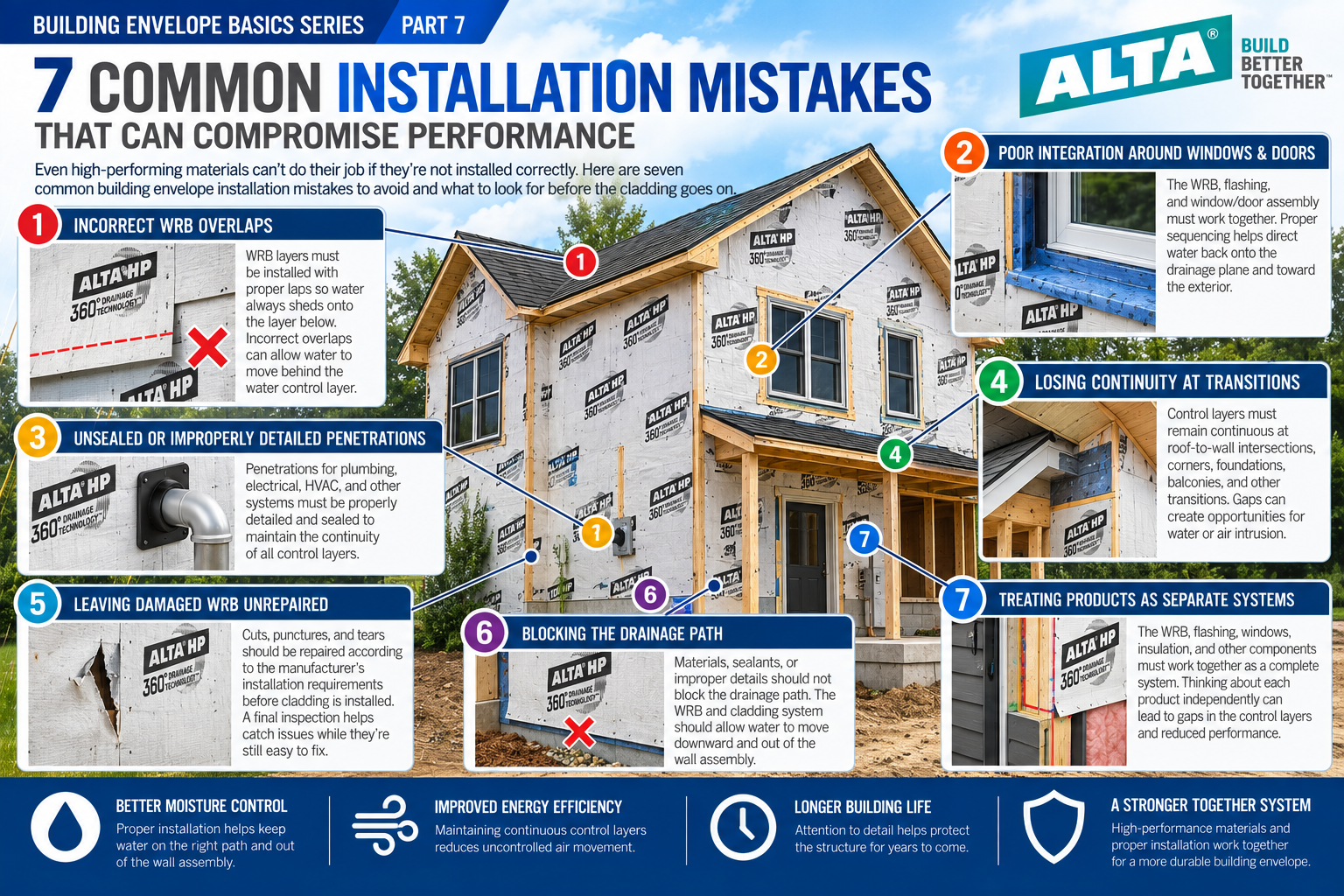
Building Envelope Basics: 7 Common Installation Mistakes That Can Compromise Performance
A high-performing building envelope starts with good design and the right materials, but installation is where those plans become reality. Even small gaps, incorrect overlaps, or poorly detailed transitions can interrupt the control layers that manage water, air, vapor, and heat. Throughout our Building Envelope Basics series, we’ve explored how these layers…
-
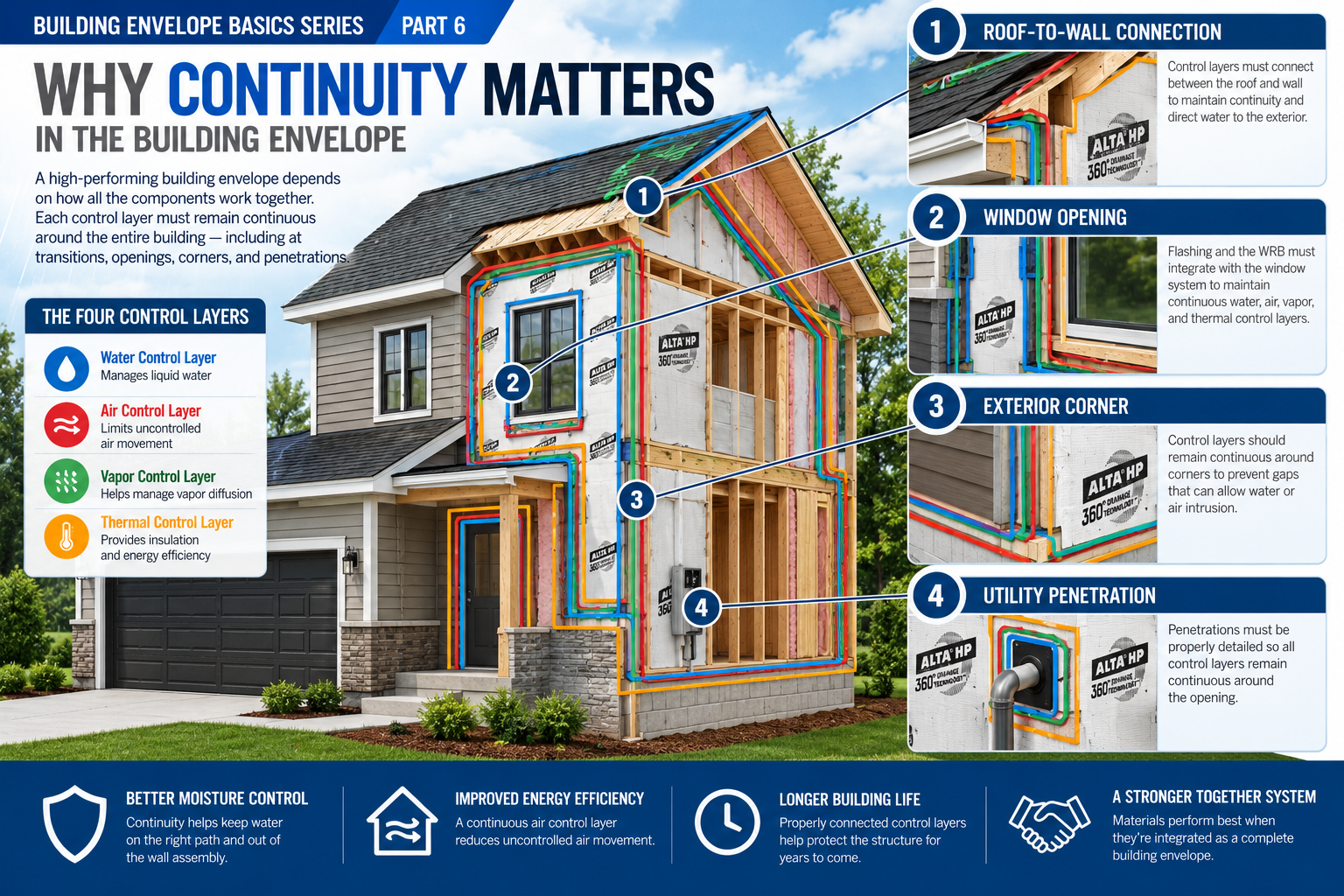
Building Envelope Basics: Why Continuity Matters in the Building Envelope
A high-performing building envelope depends on more than selecting the right materials. Weather-resistive barriers, flashing, insulation, air barriers, and drainage systems can each perform their individual functions well, but the building envelope is only as effective as the connections between them. This concept is known as continuity. Each control layer should…
-

Building Envelope Basics: Why Flashing Is Critical to Building Envelope Performance
When discussing building envelopes, products like weather-resistive barriers, insulation, and exterior cladding often receive the most attention. Yet one of the most important components is frequently hidden from view: flashing. Flashing may not be the most noticeable part of a wall assembly, but it plays a critical role in directing water…